How to stop doomscrolling the news
You are not weak-willed. The feed is built to never end, and your brain is built to fixate on bad news. You can break the doomscroll in 2026 with a handful of concrete steps, not a vow to quit.

To stop doomscrolling the news, add friction and give the news an end. Name the feeling that starts each session, read in fixed windows, turn off breaking-news alerts, set your screen to grayscale, curate a short list of sources you trust, and pick a news format that finishes so you can close it and move on.
Why doomscrolling is so hard to quit
Two forces pull in the same direction. The first is negativity bias, your brain's habit of paying more attention to bad news than good. The old newsroom line "if it bleeds, it leads" exists because it works on us. The second is the design of the feed itself, which has no bottom. There is never a natural place to stop, so you keep going.
It adds up. Researchers estimate about one in six people show signs of news consumption serious enough to raise their stress and anxiety. And a lot of people have responded by tuning out entirely. The Reuters Institute found that four in ten people worldwide now sometimes or often avoid the news, up from about three in ten in 2017. The reasons they gave most often were a hit to their mood, a worn-down feeling, and a sense that they could not do anything about the news anyway. The goal here is neither extreme. It is a middle path where you stay informed on your terms.
How to stop doomscrolling: six steps
These work best together. Do not try to white-knuckle your way to zero news. Change the conditions instead, so the easy choice is the calmer one.
Name your trigger
Most doomscroll sessions start with a feeling: boredom, anxiety, loneliness, or a day that got away from you. Notice the moment your hand reaches for the phone. Naming the trigger out loud, even just "I am anxious," creates a half-second of choice before the feed takes over.
Set a time and a limit
Read the news in fixed windows instead of grazing all day. Something like twenty minutes in the morning and twenty in the evening is enough to stay current without the all-day spiral. Make it stick with the Screen Time limit on an iPhone or Digital Wellbeing on an Android, which will nudge you when the window closes.
Turn off the alerts
Breaking-news notifications exist to pull you back in. Turn them off for your news and social apps. If a story matters enough, you will find it in your next reading window. Move those apps off your home screen into a folder so opening one is a decision, not a reflex.
Add friction and go gray
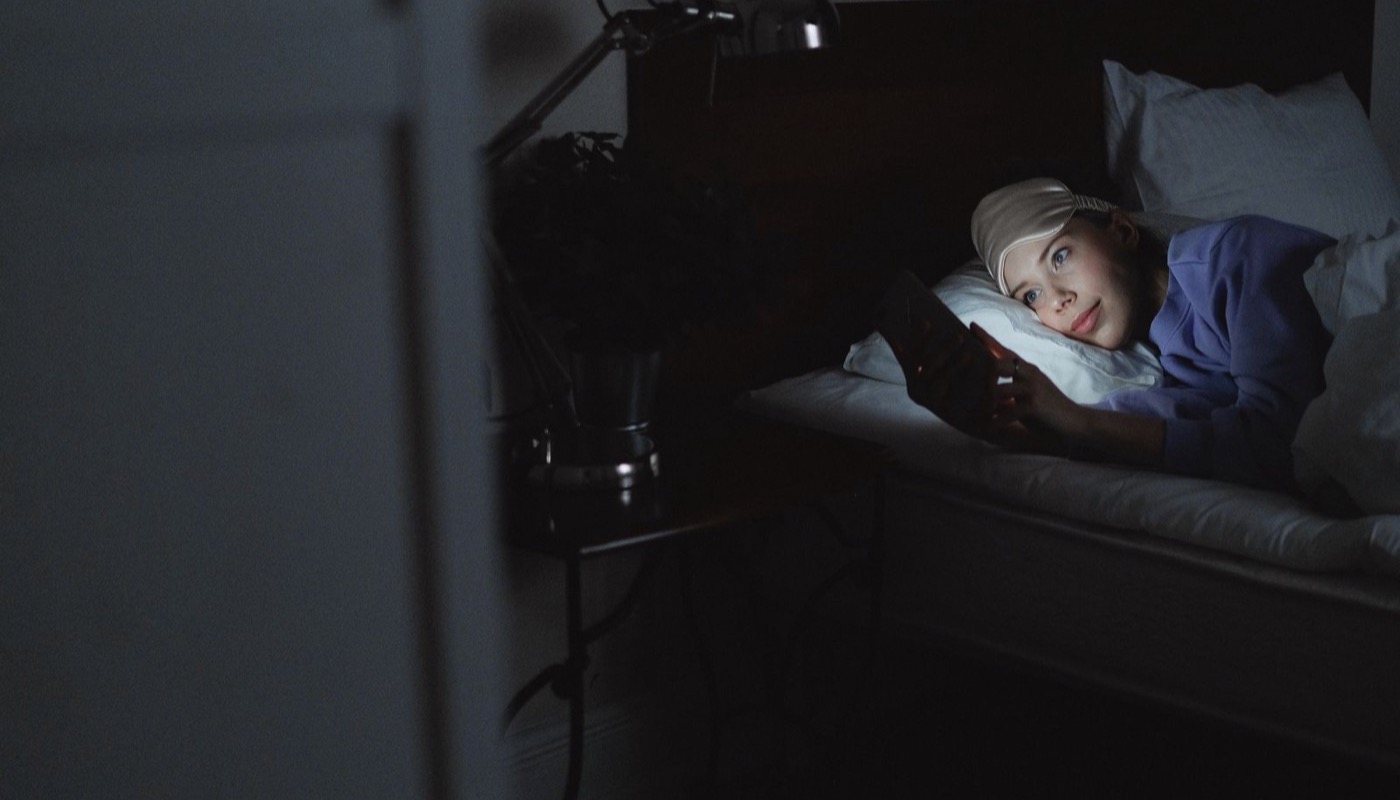
Set your screen to grayscale in your phone's accessibility settings. Feeds are designed in color to trigger the little rewards that keep you scrolling, and a gray feed is noticeably less grabby. Then charge your phone outside the bedroom, so your day does not begin and end inside the feed.
Curate your sources
An endless feed sorts itself by whatever makes you react. A short list of outlets you chose does not. Pick a handful of sources with named, vetted journalists and read those on purpose. You will be better informed from five trusted sources you selected than from a thousand posts an algorithm picked for you.
Pick a news source that ends
This is the one that fixes the root problem. The infinite feed is what keeps you there, so choose a format with a bottom. A daily briefing, an email newsletter, or a platform that shows a set number of stories and then stops all give you the same thing: a finish line. When the news can be finished, you finish it and put the phone down.
Tools and formats that help
You do not need much. Most of this lives in settings you already have, plus a source or two you actually chose.
- Screen Time and Digital Wellbeing. Built into iPhone and Android. Set app limits and a downtime schedule so the phone enforces your windows for you.
- Grayscale mode. In accessibility settings on both platforms. Many people pair it with a shortcut so they can flip color back on only when they need it.
- A finite daily briefing. Newsletters like 1440, which reports more than two million subscribers, and The Skimm are built to be read once and closed. Tangle runs the same story from the left, right, and center so you see the argument, not just one side.
- An RSS reader. A chronological reader pulls headlines from sources you choose, with no algorithm deciding what you see next and no infinite feed at the end of it.
Where Newsreel fits
We make Newsreel, so we've kept the notes factual. Newsreel is a news platform for people who have given up on the news. Vetted journalists and subject-matter experts publish the day's stories in the short, familiar formats you already scroll, except the feed is finite. There is no engagement-bait algorithm deciding what you see next and no ads pushing you to keep going. When you have read the day, you are done. Its multi-viewpoint feature, Perspectives, clusters the real arguments on a story in real time so you can see where people actually disagree. Newsreel was named the 2025 Resource of the Year by the National Association for Media Literacy Education. It is $4.99 a month or $39.99 a year.
A daily news habit that ends
Newsreel is a news platform for people who have given up on the news. Real journalists, the formats you already scroll, no ads, no algorithm built to keep you there. Read the day and put the phone down.
Get the Newsreel appFrequently asked questions
Why is the news so hard to stop scrolling?
Two things work against you. Your brain has a negativity bias, so it pays more attention to bad news, and most feeds have no bottom, so there is never a natural place to stop. The design and your wiring push in the same direction. Adding friction and choosing a format that ends are the two fixes that address both.
What is doomscrolling?
Doomscrolling is the habit of scrolling through a stream of negative news for long stretches, often without deciding to. Research links it to higher anxiety, stress, and a bleaker outlook. About one in six people show signs of news consumption serious enough to affect their health.
Is it bad to avoid the news entirely?
Cutting the news off completely is not the goal, and it is already common. The Reuters Institute found that four in ten people worldwide now sometimes or often avoid the news, up from about three in ten in 2017. The aim is a middle path: stay informed on your terms in set windows, rather than either drowning in the feed or tuning out.
Does turning my phone grayscale actually help?
For many people, yes. Feeds are built with color to trigger feel-good signals when you scroll. Removing color in your phone's accessibility settings makes the feed duller and less rewarding, which lowers the pull. It works best combined with time limits and turning off notifications.